PHONE CALL RECORD: DOLOWITZ TO MS. HAMPTON, THERAPIST OF THE DECEASED. DATE: 10/10/01 TIME: 8:14 P.M., EASTERN STANDARD TIME
Uncategorized
it was always my face

face beneath this mask [but it isn’t me]
*names have been altered to maintain anonymity
Patient XXX
Recording 01
2:01 pm
08/30/01
[recording starts]
Amy: Our sessions are going to be recorded for review by one of our senior staff. The tapes won’t ever be distributed or published; the confidentiality will be intact, but all my sessions have to be recorded to monitor my performance. Is that alright with you?
X: Sure.
Amy: Go ahead and verify your name and date of birth for the camera, please. [REDACTED], January 17, 1979.
Amy: Thank you. And, for the record, my name is Amy Hampton*. Okay [shuffling]. Alrighty. For our first session, I’m going to let you steer the discussion in whatever direction you like. Maybe just starting with what made you decide to come in.
X: Okay. I’ve, uhm, I’ve been having really terrible nightmares. I think I’m stressed out or something, I’m always tired and distracted at work.
Amy: Good start. Do you remember when the nightmares started?
X: Yeah, about two weeks ago. They were vague for the first few days, just normal running away from stuff and falling type dreams. After a few nights though they started to get weirder and more specific, I guess. I was always in my room – like, my room, not a dream version of it – and I was frozen in my bed and so so scared. I couldn’t move or scream or wake up or anything.
AMY: [scratches of pen on paper] Sounds like sleep paralysis. It’s very common, but definitely still upsetting. Keep going, [xxx].
X: Okay. Uhm, what made me want to come in was this feeling that I started having. Sometimes, during the nightmares, I feel like someone’s there.
AMY: There?
X: In my house. Outside of my window. Just there, like a shadow, pacing and staring at me. I don’t always know where they’re at and I don’t know who they are. I can’t always see it, either, but I always know it’s there. Sometimes I don’t think I’m asleep, it feels so real. But I have to be, right? I don’t know. The fear is so real. It’s the only dream I’ve had in almost a month.
AMY: Does the shadow interact with you?
XXX: No. Not yet. I think it’s trying to.
[end recording]
AUTOPSY REPORT
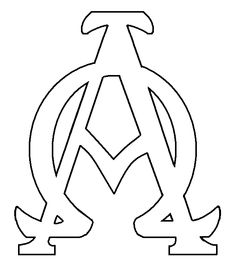
Case #288: Alpha/Omega
September 25, 2015
My name is Ruth Warren.
My older brother, Ezekiel Warren, disappeared exactly three years ago. At the end of that year, there were about ninety thousand missing person cases still active. Of those, fifty-five (including my brother’s)1 connected to each other. A Greek letter was painted on the door of each missing person’s house. In some cases whole families disappeared — either all at once or staggered throughout the year. Each family member was given their own letter.
Our house was painted with an alpha.
I’m writing all this today because I just reached a breakthrough.
For the past three years, I’ve been driving around the country and investigating each house I can find. Many are abandoned and rundown. Some are completely gone. I’ve seen various Greek letters but no other connections. I’ve also encountered some other people on the search for their own lost loved ones. They’re all in the same boat as I am. At least the ones that haven’t given up.
And they haven’t given up without reason. Many letters weren’t written in black paint. I’ve seen betas, gammas and deltas lined in blood.
Blood, but never any bodies.
Anyway, back to the breakthrough. I figured out that I was looking through cases from the wrong decade. Instead of sticking to more recent cases, I should go to the beginning. With this new direction in mind, I found the town in which these disappearances originated. A small town called Xenia. I’m on my way there now.
155 cases and counting. There doesn’t seem to be an end to these disappearances. The only thing anyone can agree on is that these are all connected, which Ruth discovered. Maybe she got too close to whatever or whoever is behind this. We met in St. Louis while I was working on this case. The cases already numbered 40 by that time and I was losing too much sleep to mention. We met at one of the houses and she said she would call if she got close to anything, and I said I would do the same.
September 28, 2015
Xenia, Texas is a tiny dot on the map with a forty mile radius from other communities. There’s only one house left standing in Xenia. The rest of the landscape is covered in ash and rubble. And not a single inhabitant roamed, except maybe some ghosts that keep the candles lit inside the surviving house. I scoped out the place. Can’t tell right now if it was a mistake or not.
Xenia made its mark on the news for being terrorized by some sort of large wolf creature. One by one the townspeople got killed. Some bodies were found in the surrounding woods but there was never a sign of a wolf. Whenever the Greek letters started popping up on doors, it became clear that the killer/kidnapper was no wolf. Many people moved out of Xenia before they were the next to be taken away. By 1985, there was no one left and no answers. And the rest of the world lost interest.
The exterior of the house was weathered by biting winds and downpours of rain, but the interior wasn’t dusty or unkempt at all. Someone must be keeping the wooden flooring spotless and tending to the potted hyacinths. It was a quaint one-story home, with a normal bedroom, bathroom and living room all furnished with normal furniture. What wasn’t normal was the closet.
Inside, the walls were covered in photos, each labeled with a letter. No red ones. I tried looking for a familiar face but there were so many that some were even pinned on top of each other. There were also miniatures lining a shelf to the side. Socrates. Aristotle. Pythagoras. Idolized even though they weren’t gods.
I then smelled something. Smoke. Fire. I tore down as many photos as I could and stuffed them inside my backpack. The glint of gold buckles from a satchel on the floor caught my eye. I stuffed that in my bag too.
Fire engulfed the living room. Through a glass window was my only escape route. I threw the pot of hyacinths at it and scrambled through the opening.
Once I got out, I watched as the rest of the house succumbed to the crackling flames. The howling wind helped the fire rage on.2
2What I discovered is that the blood at the crime scene never belonged to the person being kidnapped, but to someone who was previously taken in this manner. It was difficult and took time but we finally got a match: it was her brother’s. I wanted to let her know that he could still be alive and that the chance was high. I was also hoping she might have had a clue to where he could be. It would have put an end to this madness. But I can only carry on.
September 29, 2015
I’m back at home. My walls are now covered with the photos I took.
I found my brother’s. Like the rest, he stood in front of a black background and was smiling. A forced smile. An alpha symbol marked his head — both drawn on the photo itself and inked on his forehead.
I’ve also gone through the satchel. There was only one thing inside. A tape recorder.
The first time I tried to play the tape, it wouldn’t work. There was a piece of paper stuck in the slot. I’ll transcribe what was written on it:
| α | superior |
| β | X |
| γ | X |
| δ | X |
| ε | X |
| ζ | X |
| η | X |
| θ | culture |
| ι | X |
| κ | health |
| λ | physics |
| μ | engineering |
| ν | X |
| ξ | X |
| ο | X |
| π | mathematics |
| ρ | X |
| σ | chemistry |
| τ | religion |
| υ | morality |
| ϕ | X |
| χ | statistics |
| Ψ | psychology |
| Ω | supreme |
It explained some things, but not enough.
The recording explained a little bit more3:
[28 seconds of silence]
VOICE (dissonant)
What has one voice, and is four-footed in the morning, two-footed in the afternoon and three-footed at night?
MAN (shaky)
I’m telling you. I don’t know.
VOICE
That’s a pity. Your sister knew the answer.
MAN
Well, she is smarter than I am.
VOICE
We’ve noticed. But you have at least gone this far as to find our whereabouts.
MAN
I just want to find my sister.
VOICE
She is ours now.
MAN
I don’t care. Either tell me where she is or just kill me already since I don’t know the answer to your riddle.
VOICE
Very well then. We knew you didn’t have a mind we need. This was just a final test — just to make sure.
[end recording]
3Ruth wasn’t the first one to find tapes like this. I have a few and they all go relatively the same. A question is asked. The answers vary from “Fuck off”, to “I don’t know”. No one ever knows the answer. The interviewer just ends the tape before we can discover anything else.
October 1, 2015
I keep looking at all the pictures. So many people.
I’ve stared at Zeke’s face for hours. I have a lot of other pictures of him but I only look at this one. The one with that terrible, fake smile.
I rewatched a video I made after a full year of hunting for answers. It used to comfort me. But now it just reminds me of what I still don’t know. Of what I still haven’t accomplished.
I’ve also listened to the tape over and over again.
Sometimes I hear the man’s voice as Zeke’s instead. And then I start to cry.4
4I also explored the house in Xenia, though it seems I was too late. When I got there, it was already rubble and ash just like everything else around it. But I decided to look anyways and found something. A safe. Fireproof. Possibly waterproof. It was difficult but I managed to open it with power tools and a crowbar. Inside was only one thing: a tape. I quickly got in my car and listened to it. It was a continuation of the tape Ruth transcribed above. It went like this:
[movement of more than one person]
VOICE
We really expected more of you, John. You would have fit in here. You would have been happy.
MAN
How I could I be happy with you psychopaths? Where is my sister?
VOICE
I’m afraid you’ll never know.
[more movement]
VOICE
John Carpenter of Fargo, Minnesota, you are absolved.
[end recording]
October 3, 2015
My parents died when I was four years old and Zeke was seven. We were put into many different foster homes but there wasn’t a single one that became permanent.
We took care of each other.
Every school we attended was quick to discover that both of us were above average in most subjects. We took in knowledge like air. Once we bought our first house, the library room was the first to get furnished.
I look at all the books on those shelves now and wonder how they could have possibly cursed us.
Zeke’s a professor but he doesn’t specialize in just one subject. Whenever one class cancels, he moves onto another one.
I don’t have a job. I pretty much read books all the time. The library is my second home. Zeke always told me to do something more with my life.
I just can never figure out what.
October 5, 2015
omega — on the door5
5Ruth had long ago given me her address just in case I could not reach her. After I found out where John Carpenter lived, I came to tell her, to see if she’d made any progress. Too late. The omega on the door. I stepped inside and saw nothing. No sign of struggle or forced entry. Just this journal. Damn shame. I really could have used her help.
I went to Fargo, Minnesota. Nice town, nice people. Asked around for a John Carpenter. Finally one lady said her neighbor’s name was John. I decided to check it out. I went to the address given and there was a man. I asked him who he was and no shit, his name was John Carpenter. I showed him the tape and he had no idea what the hell it was. It sounded just like him. We knew it was him but he had no recollection of the event. He offered to let me spend the night and I accepted. I woke up around 3 a.m. to get some water and he was nowhere to be found. Without hesitation, I left. I don’t know if he left or was taken again but I know I don’t want to end up like that. I’m spending the remainder of the night at the nice hotel right outside of town. Perhaps the daylight will have some answers.
4:15 am
I am writing this in the bathroom. Someone is in my room. Something is, at least. I am going to try and stay quiet.
4:20 am
There’s a window. But the sight I was met with upon drawing back the curtains made me wish I had never seen it.
∆¥6
6That’s where #288’s record ends. I need to seek out more information.
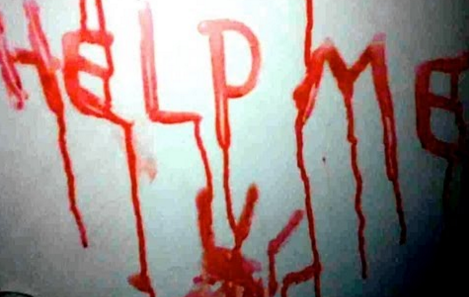
“Pferd” Case #: 874136 Evidence:Help Me
“Pferd” Case #: 874136 Evidence: Barn

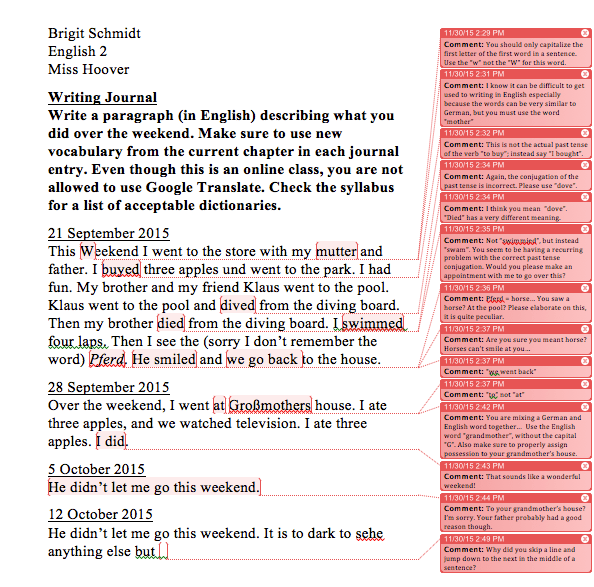
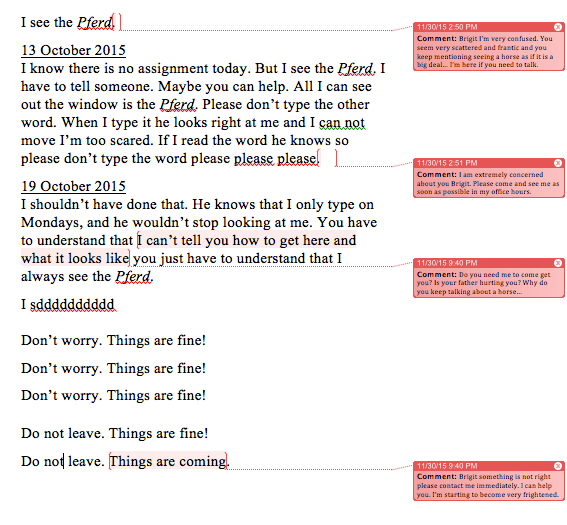
Pferd Corrections
Frankenstein & Fate
The thoughts, actions, and feelings of characters in Mary Shelley’s Frankenstein beg the question of how fate impacts the blame that can be placed on people for their actions. Victor Frankenstein, for example, claims his creating the monster was forced by something beyond his control, and his creation claims that his own behavior couldn’t be helped. However, their interactions with other characters and their opinions of themselves suggests that the monster was more of a blank slate than Frankenstein, and therefore is less to blame since he was simply a product of his environment and a sort of self-fulfilling prophecy.
By the end of the story, Frankenstein has nearly chased the monster to the North Pole with the intent of destroying him, as the monster destroyed Frankenstein’s friends and family. Weakened by the cold and his long journey, Victor is spotted by a Captain Walton and his crew and is taken aboard, where he tells them of his tragic tale. This actually happens at the beginning of the novel, though it’s at the end of Frankenstein’s life and story. After he recounts his tragedy to Walton, he dies. As Walton is in another room writing to his sister, he hears something in the room where Frankenstein’s corpse is, and walks in to find the monster hovering over the body, lamenting his creator’s death. Walton is torn between feeling pity and contempt for the tragic, murderous half-man, and in response the creature begins a monologue that will serve as the end of the novel and the last impression left on both Walton and the novel’s readers. As such, it seems fitting that his words can be and should be taken to be of greater truth and weight than much of the dialogue throughout the novel, and thus we can accept the monster’s woes and feel satisfied in pitying him.Frankenstein argues that his creating the monster was compelled by some force beyond his control, but the way he responded to his creation for which he was responsible was inarguably his choice. He chose to immediately reject his creation and condemn him to life a loneliness and hatred, which in turn caused the monster to fulfill what he would begin to view as his “work” and the “series of [his] being” (Shelley 198). Frankenstein essentially told his creation that he was a monster, and so he became a monster, killing Frankenstein’s brother William, his best friend Henry, and his wife Elizabeth. Though the creature was responsible for these deaths, Victor seems ultimately to blame, as the “curious and unhallowed wretch” that chose to play god while not responsible or compassionate enough to handle that power (Shelley 198).
In the end, both Frankenstein and the monster choose isolation in the north, where they both die. The “northern extremity of the globe,” desolate and harsh, seems a proper place to end the lives of two miserably lonely individuals (Shelley 198). The north contrasts heavily to other experiences with nature that they have had, where the “cheering warmth of summer”, “the rustling of the leaves,” and “the warbling of the birds” served to calm and comfort the monster upon his first exploration of the world (Shelley 199). Their lives and tragedies were quite different in that Victor chose his years of loneliness; he had family, friends, and love abound both at home in Geneva and at the University of Ingolstadt, but he rejected them in pursuit of that which defied nature. When his monster came to life, he rejected him too and cast him to a life of misery, which is ultimately the crux of the entire tragedy. After the death of the monster’s source of both his life and purpose, he admits that he feels “polluted by crimes and torn by the bitterest remorse” for his sins and seeks solace and redemption in death (Shelley 198). He hopes that his and Frankenstein’s deaths will allow the remembrance of them both to “speedily vanish,” so that no other will commit such atrocities; his suicide therefore makes him somewhat of a martyr, righting his unwilling wrongs before his death the best he can (Shelley 198). This contrasts to Victor’s death, who died reluctantly yet glad that he would no longer have to bear his responsibilities.
Near the end of his monologue, the creature recognizes Frankenstein’s suffering, but claims that “my agony was still superior to thine,” since he acted in such terrible ways because Frankenstein took away his only chance of acceptance and company, though he did not want to be a murderer (Shelley 199). “The bitter sting of remorse will not cease to rankle in [his] wounds” the creature claims, until “death shall close them forever” (Shelley 199). Through his death, the monster was satiating not only Frankenstein’s desire for his “extinction,” but also his own pains and “feelings unsatisfied, yet unquenched” (Shelley 198). Readers can’t help pity this pathetic outcast that knew nothing other than rejection, hatred, loneliness, and misery; at least Victor knew love, happiness, and acceptance for a good part of his life. Mary Shelley’s ending characterization of the monster and his woes allows us to recognize that he truly was a product of fate in a way that Frankenstein was not, because the monster was hated by everyone, including himself, and thus was forced to act as he knew.
Both Victor Frankenstein and his creation exemplify negative aspects of humanity: selfishness, a desire for power, an unquenchable longing for love, a need for revenge. The so-called monster, however, at least also shows deep remorse through his self-hated and subsequent suicide, shows an understanding of his misdeeds, and attempts to right his wrongs, even though he was a mere blank slate that had never been taught to act in any positive way. Rather, he was taught to hate and be violent, since he himself was hated and the victim of violence. He was the real product of fate, not Frankenstein, who made choice after choice to act with negligence. Frankenstein reached his potential, and his potential was brilliant but dark and filled with selfish motives. The creature, on the other hand, was never given such an opportunity to fulfill his potential, but in the end tried to do so by protecting future would-be creators of monsters from their ability. Yes, the monster is responsible for the deaths of three innocents since he was the one who committed the crimes; but, Victor Frankenstein is the one who must accept all the blame, because all misdeeds in the novel come back to him.
Third and Fourth Last Paragraphs of Frankenstein:
“Fear not that I shall be the instrument of future mischief. My work is nearly complete. Neither yours nor any man’s death is needed to consummate the series of my being and accomplish that which must be done, but it requires my own. Do not think that I shall be slow to perform this sacrifice. I shall quit your vessel on the ice raft which brought me thither and shall seek the most northern extremity of the globe; I shall collect my funeral pile and consume to ashes this miserable frame, that its remains may afford no light to any curious and unhallowed wretch who would create such another as I have been. I shall die. I shall no longer feel the agonies which now consume me or be the prey of feelings unsatisfied, yet unquenched. He is dead who called me into being; and when I shall be no more, the very remembrance of us both will speedily vanish. I shall no longer see the sun or stars or feel the winds play on my cheeks. Light, feeling, and sense will pass away; and in this condition must I find my happiness. Some years ago, when the images which this world affords first opened upon me, when I felt the cheering warmth of summer and heard the rustling of the leaves and the warbling of the birds, and these were all to me, I should have wept to die; now it is my only consolation. Polluted by crimes and torn by the bitterest remorse, where can I find rest but in death?
“Farewell! I leave you, and in you the last of humankind whom these eyes will ever behold. Farewell, Frankenstein! If thou wert yet alive and yet cherished a desire of revenge against me, it would be better satiated in my life than in my destruction. But it was not so; thou didst seek my extinction, that I might not cause greater wretchedness; and if yet, in some mode unknown to me, thou hadst not ceased to think and feel, thou wouldst not desire against me a vengeance greater than that which I feel. Blasted as thou wert, my agony was still superior to thine, for the bitter sting of remorse will not cease to rankle in my wounds until death shall close them for ever.”
Works Cited:
Shelley, Mary Wollstonecraft, and Maurice Hindle. “Chapter 24.” Frankenstein, Or, The Modern Prometheus. London: Penguin, 2003. 198-99. Print.
Skin Deep
Appendix: ‘You, who call Frankestein your friend, seem to have a knowledge of my crimes and his misfortunes. But, in the detail which he gave you of them, he could not sum up the hours and months of misery which I endured, wasting in impotent passions. For while I have destroyed his hopes, I did not satisfy my own desires. They were forever ardent and craving; still I desired love and fellowship, and I was still spurned. Was there no injustice in this? Am I to be thought the only criminal, when all human kind sinned against me? Why do you not hate Felix, who drove his friend from the door with contumely? Why do you not execrate the rustic who sought to destroy the saviour of his child? Nay, they are virtuous and immaculate beings! I, the miserable and the abandoned, am an abortion, to be spurned at, and kicked, and trampled on. Even now my blood boils at the recollection of this injustice.’ Shelley, page 223-224.
Mary Shelley’s epistolary Frankenstein chronicles the descent into madness of its title character, Victor Frankestein, after his success in creating and animating a human-like being. The nameless creature chases and torments Frankenstein until his death in the Arctic, where the creature comes face-to-face with the man dictating the story. Published in 1818, the novel was surrounded by concepts and ideas that find their origins in the romantic ideals of the 18th century. Not to be confused with the Romanticism of some of Shelley’s contemporaries, the impressions of these romantic ideals can be felt strongly in the correlation drawn between outward beauty and inward virtuosity and goodness. Through the voice of Victor Frakenstein, the idea that one’s appearance is directly informed and shaped by the presence of natural goodness is reinforced repeatedly in the novel. This ideal is one that consistently informs the treatment of the creation, and the creature itself directly confronts this superficiality with a barrage of rhetorical questions. These questions force Walton and his audience, the readers, to turn a critical eye inwards and address the source of the fear that guided the treatment of the creature.
The passage being addressed takes place on the penultimate page of the novel, at the moment when the creature visits the dead Frankenstein. Before delving into the heart of the passage, however, there’s a moment in the first line of the selection that casts an interesting shadow on the interpretation of this piece. Recalling again that Frankenstein has been narrating his story to a third party, the monster begins speaking to Walton by saying “You…seem to have a knowledge of my crimes and his misfortunes. But, in the detail which he gave you of them, he could not sum up…the misery which I endured” (Shelley, 223-224). Here the creature very fairly points out a blemish in the situation; Frankenstein has only imparted his half of the exchange with the creature; Victor relayed its crimes and his own suffering at the hands of the creature, but he wasn’t capable of expressing the misery that the creature would have endured during its existence. This immediately savors of unreliable narration, and the creature, having successfully undermined Frankenstein’s narrative authority, lays into Walton with a barrage of questions.
There’s a mild anaphoric element present in the rhetorical questions posed by the creature in the heart of this paragraph. Each statement begins with a form of a question: “Was there”, “Am I,” and “Why…Why” all pepper the reader with the creature’s pain and frustration at the responses he received from humans at no other provocation than his visage. The creature, all the while acknowledging the horrors he committed against Frankenstein in the line “while I have destroyed his hopes” (Shelley, 224), reminds Walton of what he has endured from people he caused no harm. The line “Am I to be thought the only criminal” begs the question of why the humans aren’t treated with the same amount of malice as him, but the sarcastic answer of “Nay, they are virtuous and immaculate beings!” (Shelley, 224) demonstrates the monster’s awareness of the fact that beauty is enough for absolution, and that he is thought to be deserving of rejection because of his appearance. The creature explains that all he desired was “love and fellowship” (Shelley, 224), and he heavily implies in the passage that his crimes are in direct response to the way he was dismissed. Looking at the evidence from this passage, we can begin to unravel how the creature became a monster under the influence of the beauty/morality concept, and in turn undermine the judgmental foundations for the humans’ treatment of the creature.
 (Oc)Cult Classics